June 10, 2026 · 7 min read
Word Scrambler vs Anagram Solver: What's the Difference?
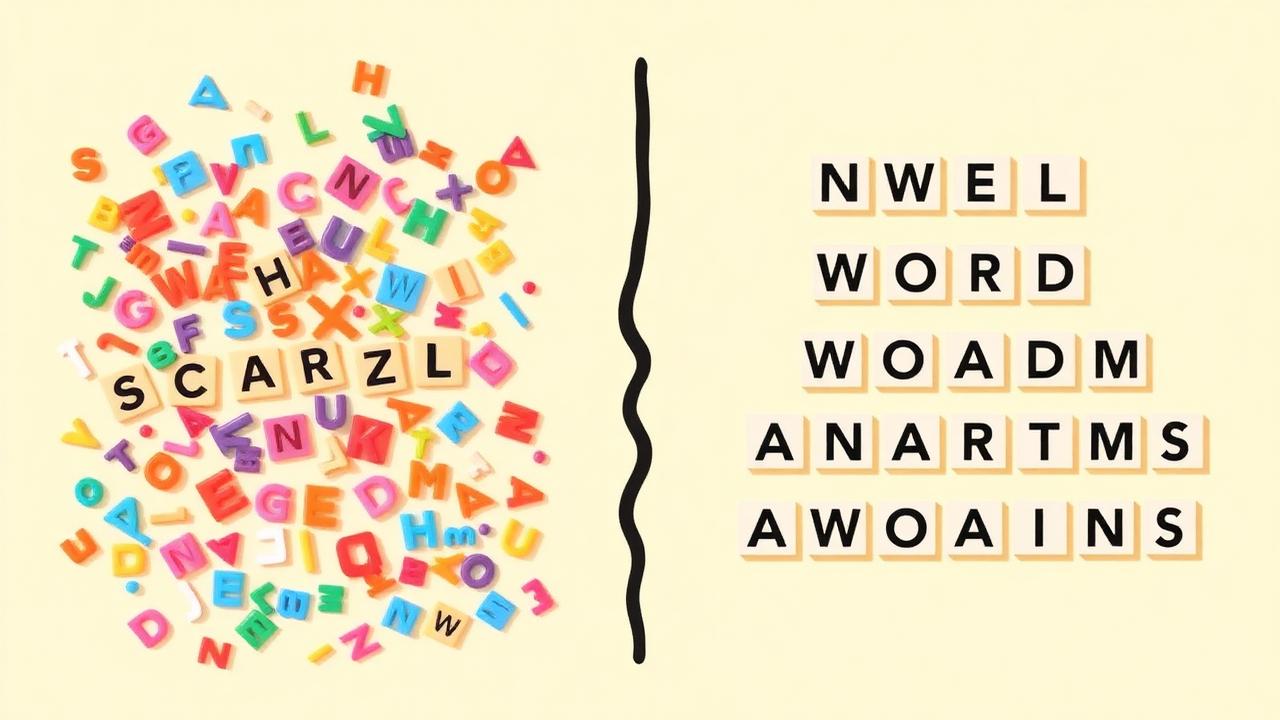
If you spend any time around word games, you've probably bumped into two terms that sound almost interchangeable: word scrambler and anagram solver. Both deal with mixed-up letters, both help you find words, and both can rescue you from a tough turn in Scrabble or the daily puzzle in your newspaper. Yet they are not the same thing, and understanding the difference will make you a sharper, faster, more strategic player. In this guide we'll break down exactly what each tool does, where they overlap, where they diverge, and how to choose the right one for the job in front of you.
What Is a Word Scrambler?
A word scrambler — sometimes called a word finder or word unscrambler — takes a set of letters and returns every valid word you can build from some or all of them. The key phrase there is "some or all." If you feed a scrambler the letters in garden, it will hand back not only the six-letter anagrams like danger and ranged, but also shorter words such as grade, anger, range, gear, dear, read, rang, age, and den. It treats your tiles as a pool of resources and digs out every combination the dictionary recognizes.
This makes word scramblers ideal for tile-based games where you score by playing whatever fits — Scrabble, Words With Friends, Wordscapes, and countless mobile word games. You rarely use all your letters in a single move, so you need a tool that surfaces the best shorter plays alongside the rare full-rack bingo.
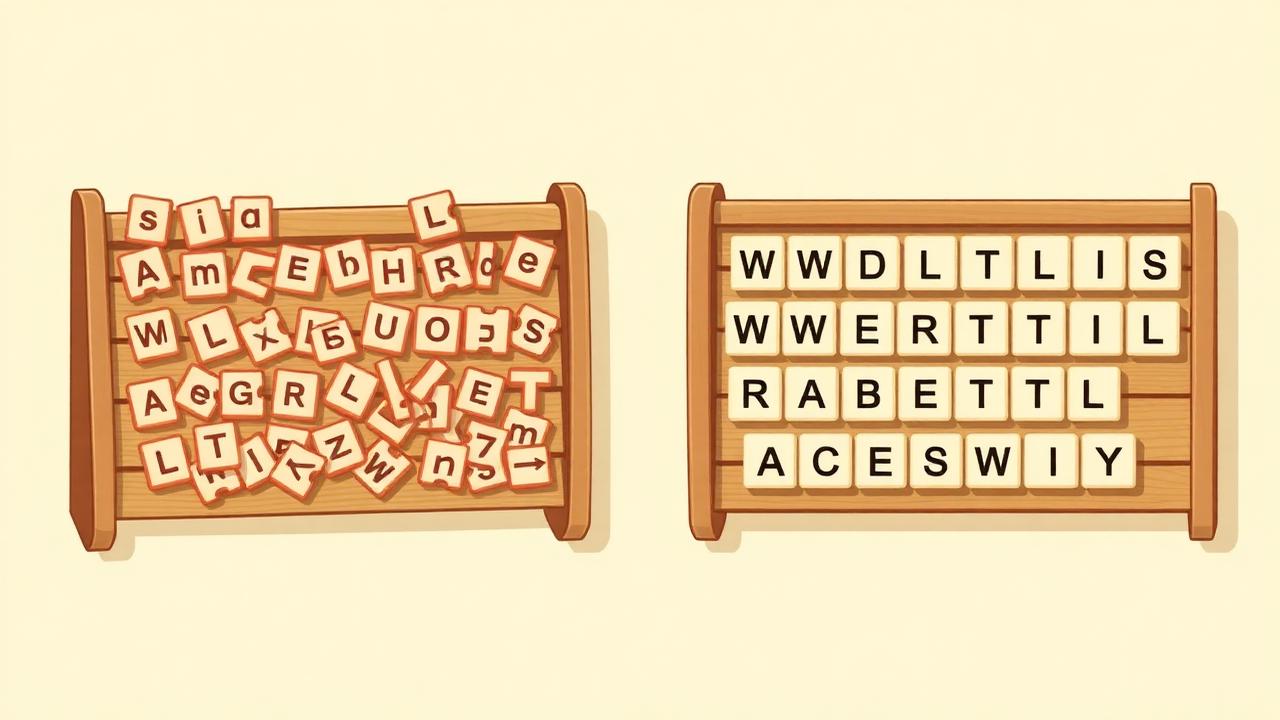
What Is an Anagram Solver?
An anagram solver is more purist. A true anagram uses every single letter of the original, exactly once, to form a new word or phrase. Listen becomes silent. Dormitory becomes dirty room. An anagram solver is therefore looking for rearrangements that consume the entire set of letters — no leftovers allowed. It's the tool of choice for cryptic crossword clues, anagram-based puzzles, and word play where the challenge is specifically to use all the letters you've been given.
Because anagram solvers demand a perfect, full-length match, they typically return far fewer results than a word scrambler working on the same input. That's not a weakness — it's the point. When a puzzle tells you the answer is a single nine-letter word made from these exact nine letters, you don't want a flood of three- and four-letter distractions.
The Core Difference in One Sentence
Here's the simplest way to remember it: a word scrambler finds every word hiding inside your letters, while an anagram solver rearranges all your letters into new words. Scramblers are about coverage and options; anagram solvers are about exact, complete rearrangements. One gives you a menu, the other gives you the precise answer to a constrained riddle.
Where They Overlap
The confusion is understandable because the two tools share a lot of DNA. Every anagram is, technically, one of the results a word scrambler could return — specifically the results that happen to use all the letters. In other words, the anagrams are a subset of the scrambler's output. Many modern tools, including ours, blur the line by letting you filter results by length, so you can ask a scrambler to behave like an anagram solver simply by viewing only the words that use every tile.
They also rely on the same underlying machinery: a large dictionary and a fast algorithm that checks which words can be assembled from the available letters. The difference is mostly in the constraint applied at the end — "use any number of letters" versus "use them all."
When to Use a Word Scrambler
Reach for a word scrambler whenever your goal is to find the best possible play from a rack of tiles, especially when you won't use them all. That covers the vast majority of everyday word gaming: building off existing words on a Scrabble board, clearing awkward letters like Q, Z, and X with short high-value words, or hunting for a five-letter answer inside a seven-letter jumble. If you want maximum options and the freedom to pick the highest-scoring fit, the scrambler is your friend.
When to Use an Anagram Solver
Choose an anagram solver when the puzzle explicitly requires using all the letters. Cryptic crosswords, anagram clues ("confused", "mixed up", and "rearranged" are classic anagram indicators), and word-rearrangement brain teasers all fall into this camp. If you've been handed a fixed set of letters and told the answer uses every one of them, the anagram solver cuts straight to the valid full-length rearrangements without the noise.
A Practical Example
Suppose your letters are T, R, A, I, N, E, D. A word scrambler will return a long list: trained, retain, detain, ranted, rained, train, drain, diner, tired, tread, rind, dent, ear, and dozens more. An anagram solver, by contrast, will only show the seven-letter rearrangements — trained, detrain, and antired — because those are the words that use all seven letters. Same input, very different output, each suited to a different task.
Which One Should You Learn to Do in Your Head?
The mental skills overlap, but practicing the scrambler mindset pays off more often. Because most games reward partial-letter plays, training yourself to quickly see shorter words inside a jumble — sorting vowels and consonants, spotting common endings — translates directly to higher scores. Anagram intuition is a wonderful party trick and a crossword superpower, but day to day, thinking like a scrambler wins more turns.
The Bottom Line
Word scramblers and anagram solvers are cousins, not twins. A scrambler maximizes the words you can extract from a pool of letters; an anagram solver pinpoints the rearrangements that use every letter exactly once. Knowing which problem you're solving lets you pick the right tool and save precious time. The unscrambler below leans into the scrambler philosophy — type in your letters and instantly see every word you can make, then filter by length if you only want the full anagrams.